Clube União Micaelense chose to honour one of its most remarkable figures by naming its Football School — for the Unis, Petizes, and Traquinas age groups — after Professor Augusto Moura Júnior, keeping alive the memory of the much-missed “Mestre” (Master), a defining figure in our Club’s history.
It was in his name that, in 2012, the Club kicked off the tradition of naming each edition of the oldest youth football tournament held in the Azores — today an event of international prestige.
Professor Augusto Moura Júnior’s legacy in physical education and sport, especially football, lives on in a dignified and heartfelt way through the Club he was always part of.
His name also lives on in the street names of the largest municipality in the Azores, honoured on a small square in the Alcindo Alves dos Santos neighbourhood — a fitting recognition from the Municipality of Ponta Delgada.
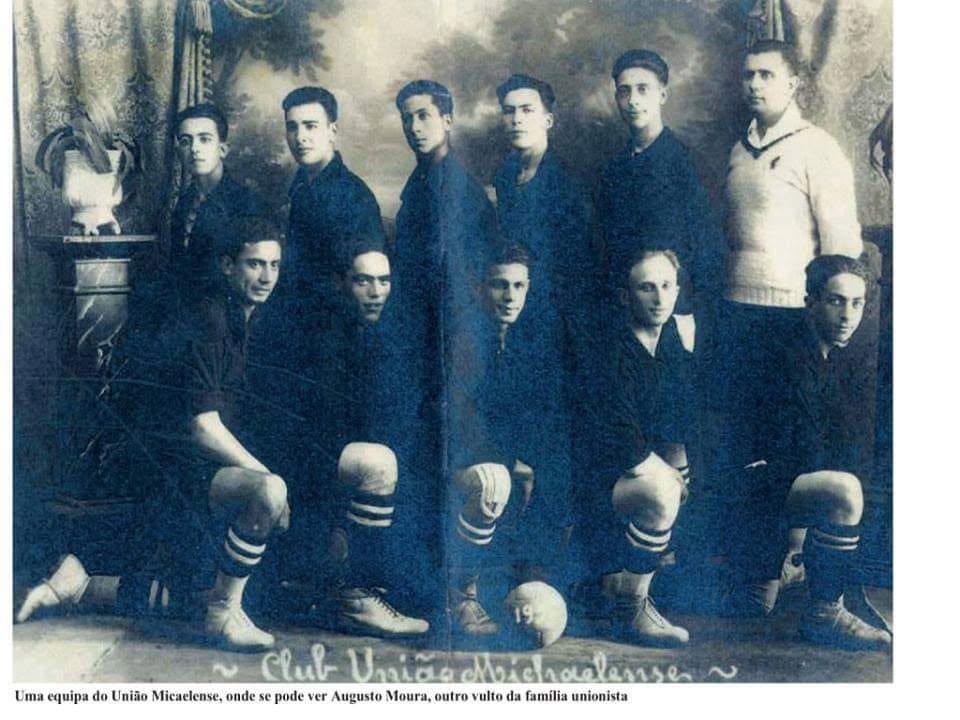
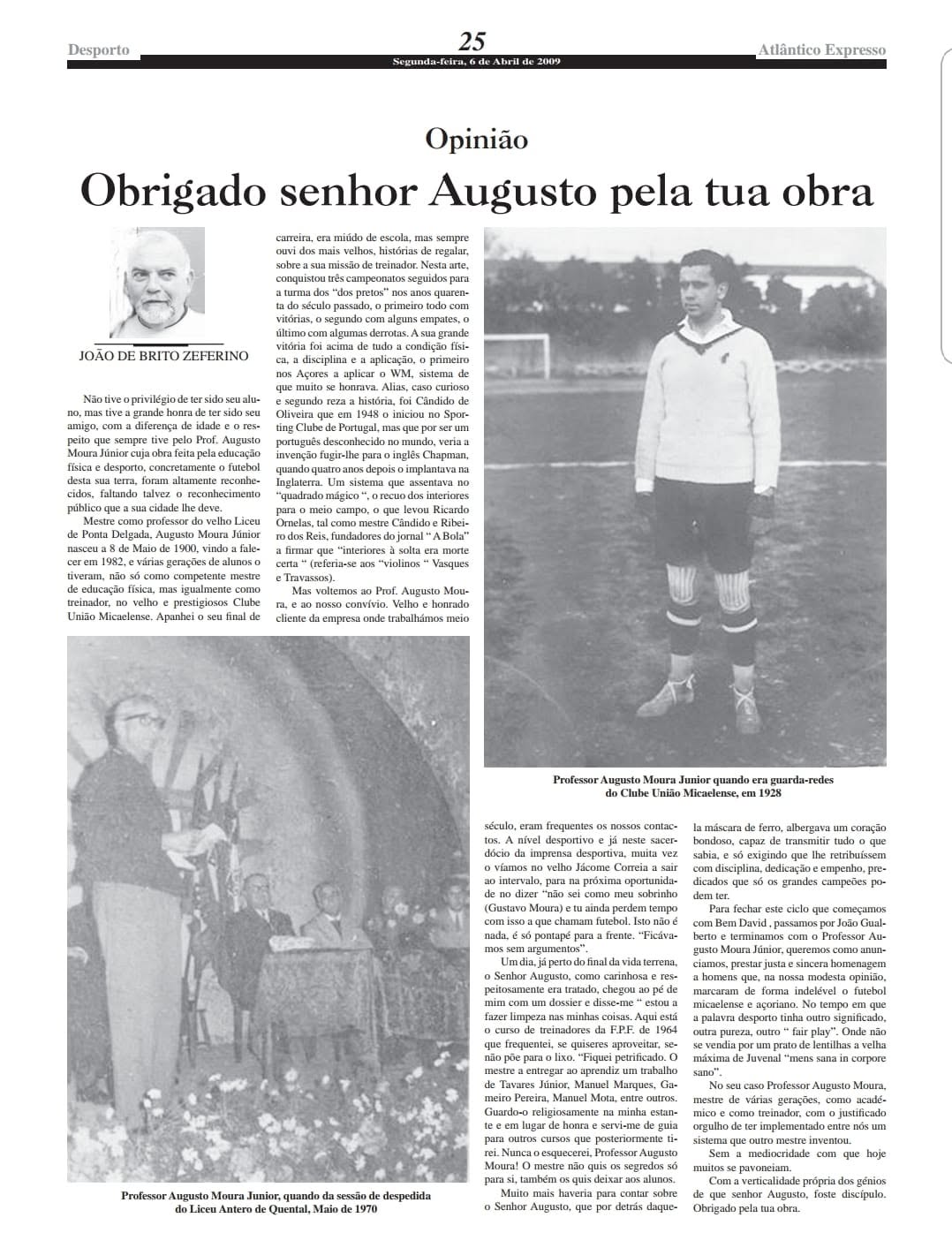
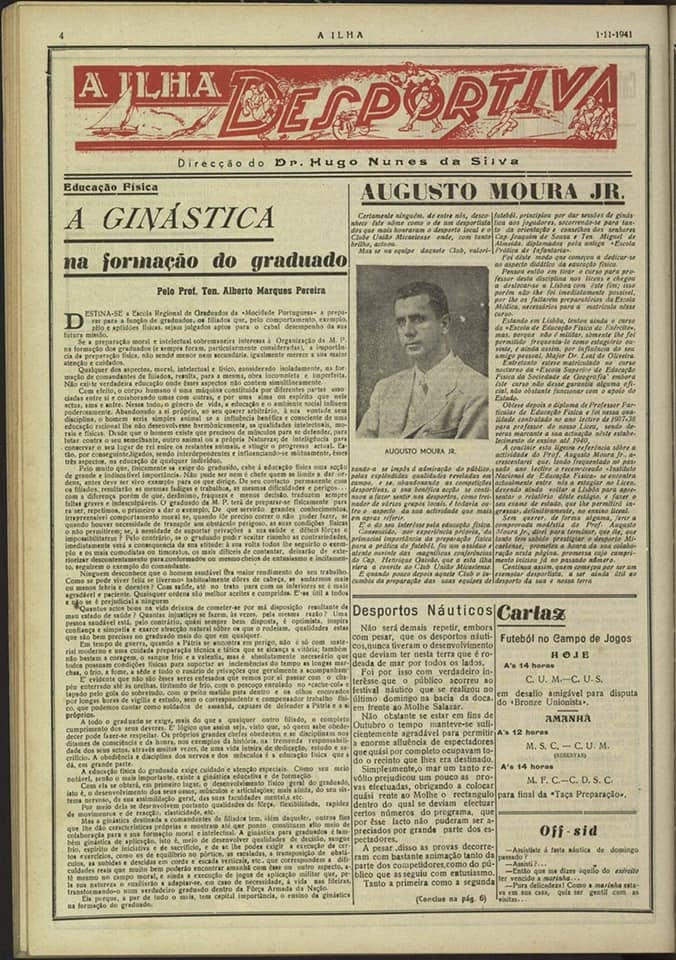
Born on 8 May 1900, Augusto Moura Júnior passed away in 1982. At the former Liceu de Ponta Delgada, where he taught, he was the driving force behind building the school’s football field — today fitted with synthetic turf.
Across decades, generations of students remember him as a dedicated and skilled Physical Education teacher, a role he held until his retirement in 1970.
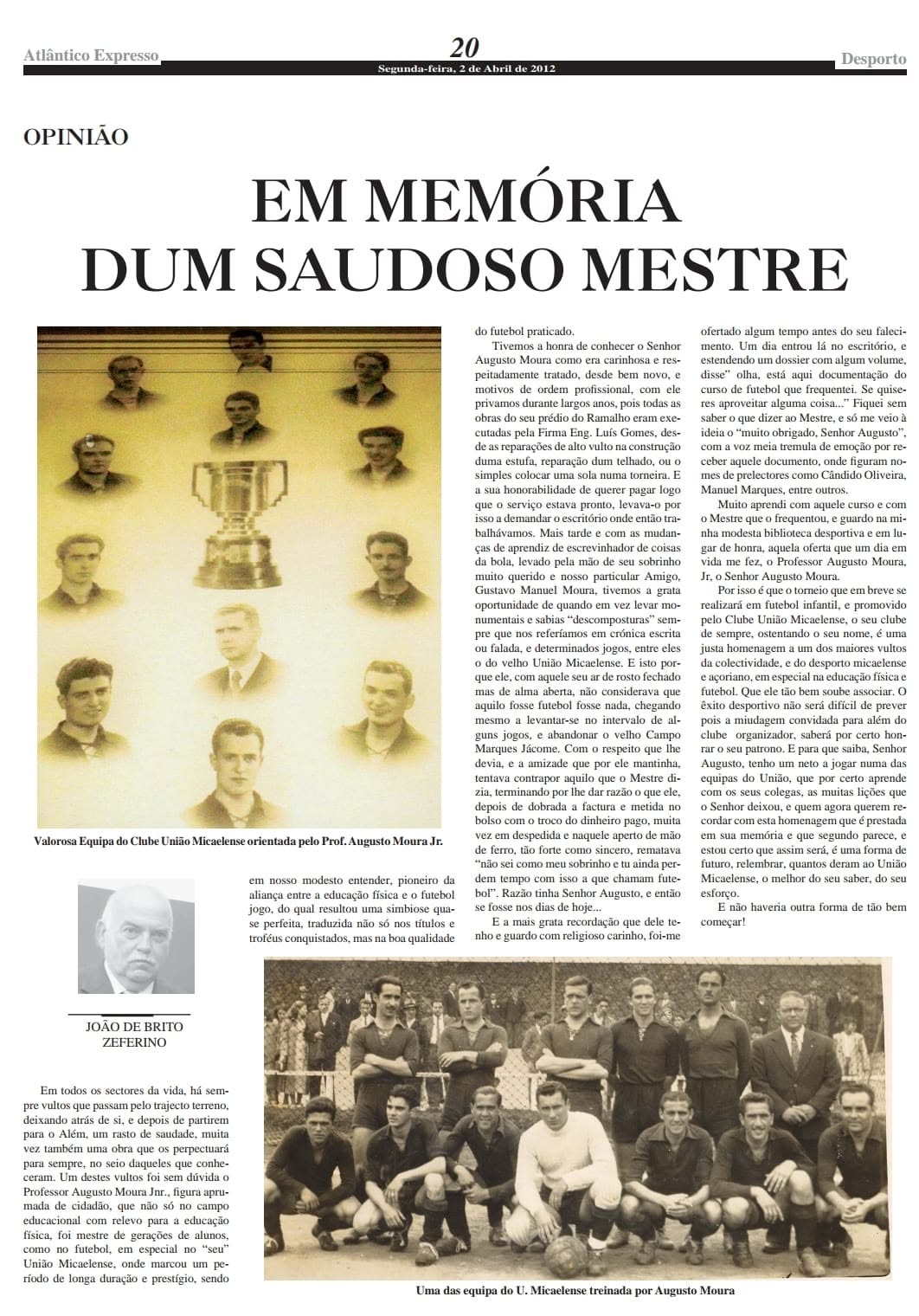
As a player, he took on the demanding role of goalkeeper. But it was as a coach that he truly stood out, leading Clube União Micaelense to three consecutive championships in the 1940s — the first won without a single loss, the second with a few draws, and the last with a handful of defeats.
His real breakthrough came with the introduction of physical conditioning applied to the game, something unheard of at the time. Demanding when it came to discipline, he asked his athletes for dedication and commitment, while also standing out for his kindness, his passion for teaching, and his endless drive to share knowledge.
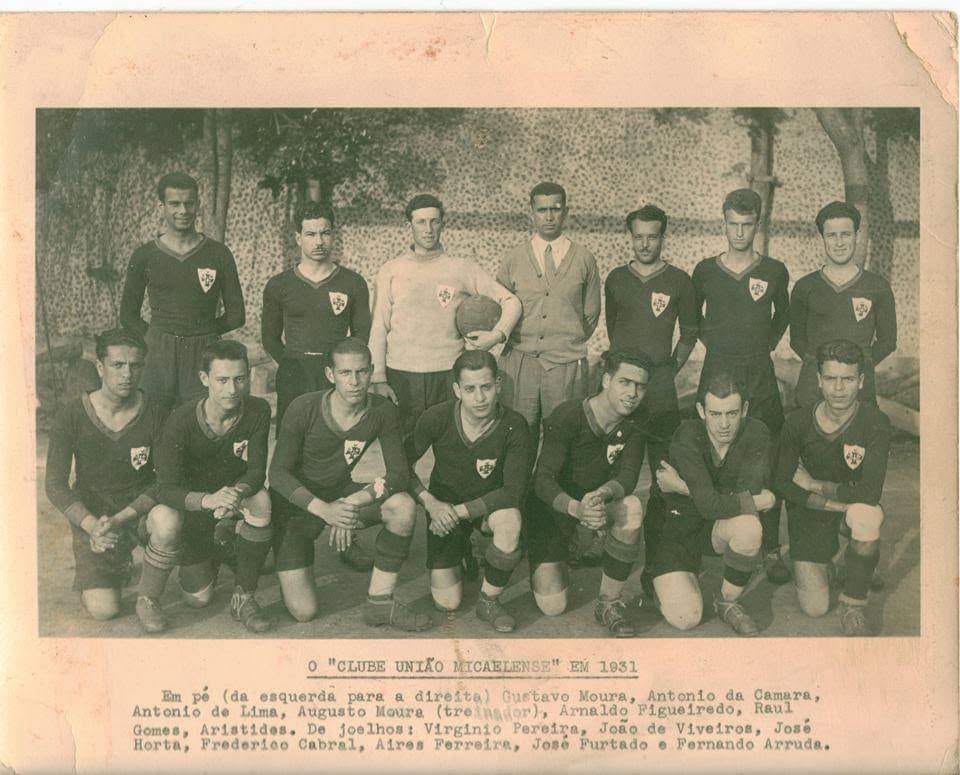
He was a pioneer in the Azores in applying the WM tactical system, something he took great pride in. Later, in 1964, he completed a coaching course run by the Portuguese Football Federation (FPF) — a rare achievement at the time, marking a new chapter in access to technical and tactical football knowledge in the Azores.
His work, his example, and the legacy he left behind are a fundamental part of our Club’s foundations. For all of this, it is only fitting that the young athletes of the Unis, Petizes, and Traquinas groups at our Football School now know, and proudly carry, the name of this distinguished Micaelense — a symbol of values, dedication, and love for football and for Clube União Micaelense.